
Cognitive Behavioral Therapy vs. Dialectical Behavior Therapy: Know The Differences
Cognitive behavioral therapy (CBT) is one of the most widely used therapeutic modalities due to its strong evidence base and broad applicability to several mental health conditions, including anxiety, depression, ADHD, PTSD, and insomnia. Dialectical behavior therapy (DBT) builds on many of the principles of CBT and is also considered an evidence-based treatment. However, it employs more structure and skills training to address emotion dysregulation and self-harm behaviors, which are commonly seen in conditions such as borderline personality disorder. While each has its own distinctive features, these approaches are complimentary in many ways and are often used in tandem. This article will provide a clear comparison between CBT and DBT, summarizing their main similarities and differences.
Philosophical Foundations
CBT is influenced by stoic philosophy and the Socratic Method, which uses open-ended questions to stimulate critical thinking and challenge assumptions or beliefs. It is a collaborative dialogue that guides individuals toward discovering deeper truths or understandings of themselves or situations using logic and reasoning.
DBT is rooted in mindfulness skills stemming from Buddhism and Zen practices, which emphasize acceptance and impermanence. Drawing on more Eastern perspectives, DBT teaches people techniques to tolerate pain or distress and to accept how things are rather than trying to change them, which is seen as a cause of suffering.
Delivery and Application
CBT focuses on examining how thoughts, feelings, and behaviors influence each other and empowers people to take control of their thoughts and behaviors. It uses techniques such as problem solving, cognitive restructuring, guided imagery, and behavior modification which help individuals gain insights into their challenges and learn skills to manage them independently. Its adaptability and versatility make it a popular approach for a range of issues including anxiety, depression, ADHD, OCD, PTSD, eating disorders, substance use disorders, insomnia, and chronic pain. CBT will often employ worksheets or homework exercises, though it does not require strict adherence to these in order for it to be beneficial.
By contrast, DBT is highly structured and maintains that individuals must complete four training modules (mindfulness; distress tolerance; emotion regulation; and interpersonal effectiveness) in order to receive the full benefits. It is typically delivered in a group setting and encourages practice and phone coaching between sessions. DBT emphasizes validating one’s feelings or experiences and cultivating self-acceptance in spite of one’s challenges, with the ultimate goal of achieving a life worth living. It focuses on helping people acknowledge their pain or discomfort using mindfulness while using skills to regulate emotions, build relationships, and cope with distress effectively. Individuals are taught to identify their triggers and respond to them with healthy coping mechanisms instead of impulsive or harmful ones. DBT was created to help those with borderline personality disorder, who often struggle to manage intense emotions and impulsive behaviors occurring in response to overwhelming feelings of pain or rejection. However it has also shown to be effective for the treatment of anxiety, depression, suicidality, bipolar disorder, PTSD, eating disorders, and substance use disorders.
How CBT and DBT Overlap
Both CBT and DBT are evidence-based and operate on the premise that thoughts, emotions, and behaviors are interconnected. They both aim to identify and modify self-destructive or maladaptive behaviors to improve quality of life and focus on practical, "here-and-now" solutions rather than exclusively exploring past traumas. Additionally, they both emphasize a collaborative relationship between the client and therapist and teach specific coping skills that individuals are encouraged to practice between therapy sessions.
How CBT and DBT Differ
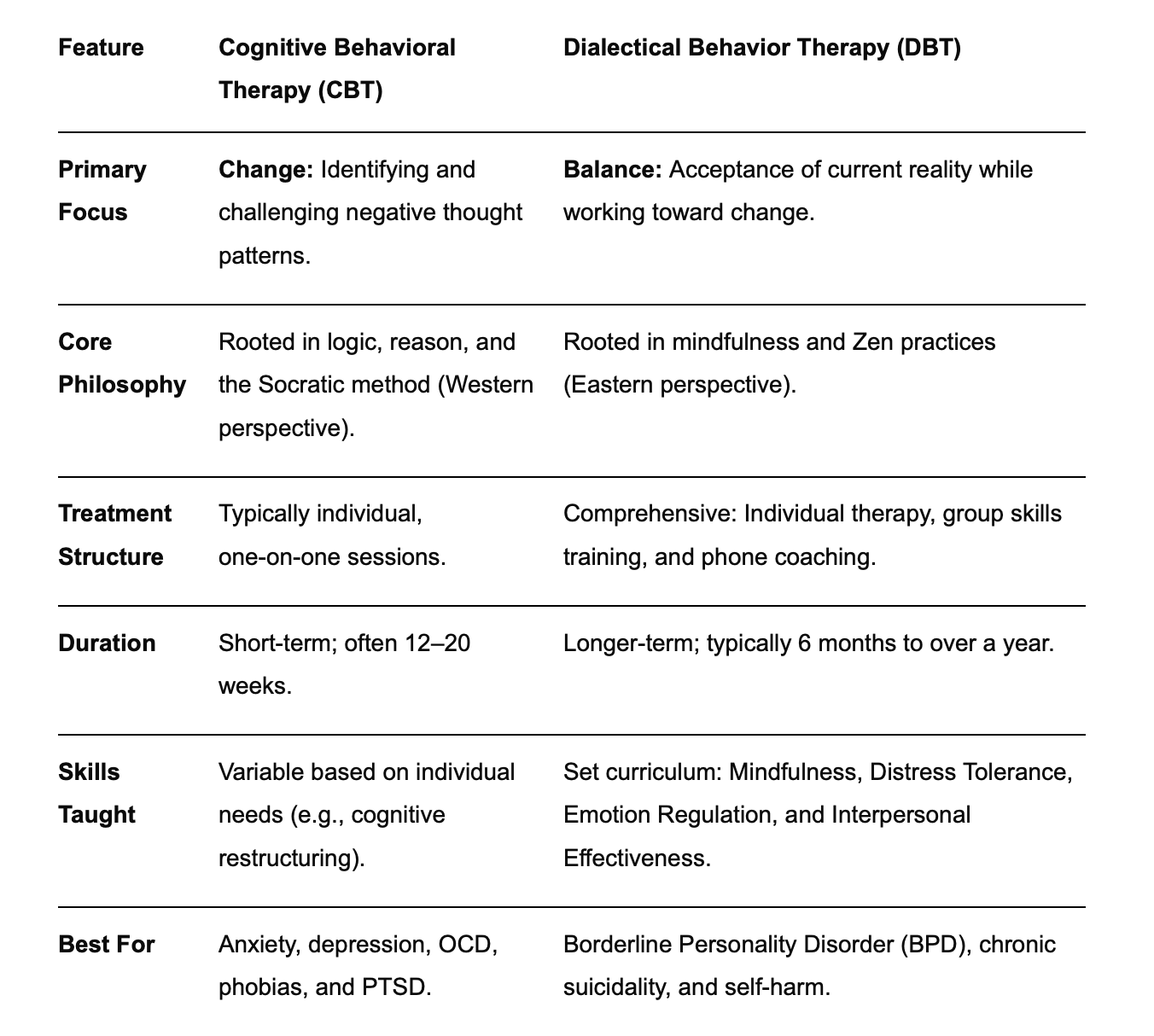
Knowing the main differences between CBT and DBT can help you decide whether one would be more appropriate for you. If you would like to learn more about how CBT or DBT could help you or work with a therapist that uses evidence-based approaches such as CBT and DBT feel free to schedule a complimentary phone consultation.